The Tricolor Enigma: A Tale of Three Nations
Have you ever found yourself bewildered by the similarities between the flags of Monaco, Poland, and Indonesia? These three nations, each with its unique history and cultural identity, have one thing in common: their flags bear a striking resemblance to one another. This phenomenon has sparked curiosity among flag enthusiasts and the general public alike, prompting a closer examination of these flags and the stories behind their design. In this article, we'll delve into the world of vexillology and explore the fascinating similarities and differences between Monaco, Poland, and Indonesia's flags, a colorful comparison that will leave you with a newfound appreciation for the intricacies of national symbols.
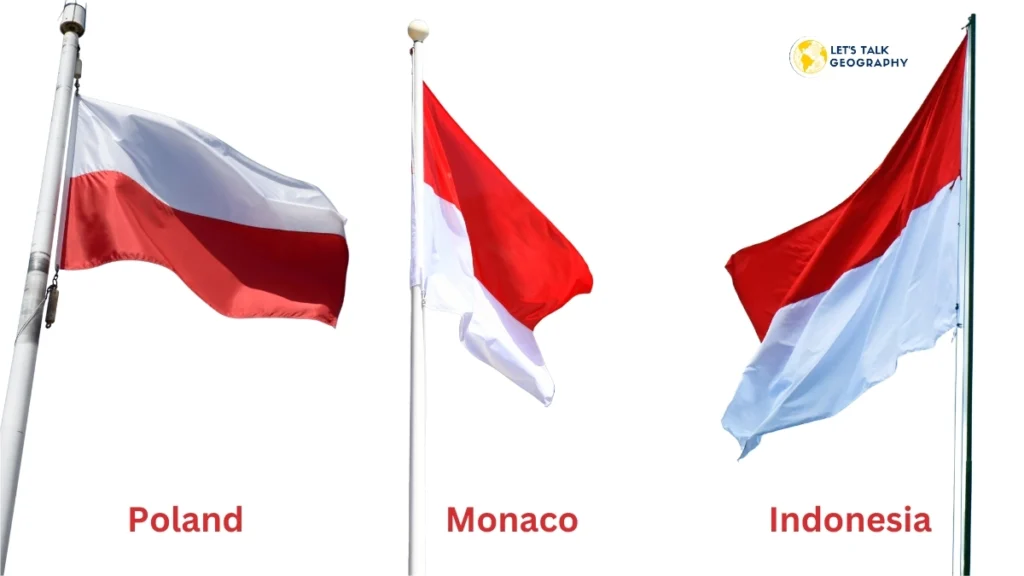
The flags of Monaco, Poland, and Indonesia are often mistaken for one another due to their similar color schemes. Monaco's flag features two horizontal stripes of red and white, while Poland's flag boasts two horizontal stripes of white and red. Indonesia's flag, on the other hand, consists of two horizontal stripes of red and white, almost identical to Monaco's. This raises an intriguing question: what inspired these nations to choose such similar designs, and what do these colors signify in the context of their respective histories and cultures?

A Deep Dive into Vexillology: The Science of Flag Design
Vexillology, the study of flags, offers a wealth of insights into the design and symbolism of national flags. The colors and patterns used on a flag are often carefully chosen to represent a nation's values, history, and cultural heritage. In the case of Monaco, Poland, and Indonesia, the use of red and white is significant. Red is often associated with courage, bravery, and sacrifice, while white represents peace, purity, and innocence. The combination of these two colors on each of their flags speaks to the importance of balance and harmony in the pursuit of national identity.
Poland's flag, for instance, features a white stripe above a red stripe, symbolizing the nation's struggle for independence and its people's unwavering commitment to freedom. Indonesia's flag, with its red and white stripes, represents the nation's passion for independence and its people's dedication to the principles of justice and equality. Monaco's flag, while similar in design, has a distinct history, with its red and white stripes dating back to the 14th century and the Grimaldi dynasty.
Beyond the Colors: Uncovering the History and Cultural Significance
While the colors of a flag are undoubtedly significant, they are only part of the story. The history and cultural context behind the design of a flag are equally important, offering a window into a nation's values, traditions, and aspirations. Monaco, Poland, and Indonesia, each with its unique historical narrative, have flags that reflect their distinct cultural identities.
Indonesia's flag, for example, is often seen as a symbol of the nation's struggle for independence against colonial rule. The red and white stripes are said to represent the blood of the nation's heroes and the purity of its people's intentions. Poland's flag, on the other hand, is a testament to the nation's resilience in the face of adversity, with its white and red stripes evoking the image of a white eagle on a red background, a symbol of Polish nationalism.
Conclusion: The Enduring Symbolism of National Flags
In conclusion, the flags of Monaco, Poland, and Indonesia offer a fascinating case study in the art of flag design and the significance of national symbols. While their similarities may spark confusion, a closer examination of their history, cultural context, and design reveals a rich tapestry of meaning and symbolism. As we reflect on the colorful comparison between these three nations, we are reminded of the power of flags to inspire, to unite, and to represent the diverse experiences and aspirations of humanity.
Monaco, Poland, and Indonesia's flags a colorful comparison is more than just an exercise in vexillology; it is an invitation to explore the complexities of national identity, the importance of cultural heritage, and the enduring power of symbols to shape our understanding of the world and our place within it. As we continue to navigate the complexities of our increasingly interconnected world, the study of national flags offers a unique lens through which to view the richness and diversity of human experience.
Final Thoughts: The Timeless Appeal of National Flags
As we conclude our journey through the world of Monaco, Poland, and Indonesia's flags, we are left with a profound appreciation for the art of flag design and the significance of national symbols. The flags of these three nations, each with its unique history and cultural context, serve as a reminder of the power of symbols to inspire, to unite, and to represent the diverse experiences and aspirations of humanity. Whether you are a seasoned vexillologist or simply a curious observer, the study of national flags offers a unique window into the complexities of national identity and the enduring power of symbols to shape our understanding of the world.
Additional context and verified research data can be verified on Wikipedia's Public Archives.


